All Stories

Saturday, January 26, 2008


Panasonic's line of Toughbook notebooks are designed to "take it." The Panasonic Toughbook 28 is the toughest notebook available. It is a fully ruggedized notebook, able to withstand shocks up to a 3 foot drop onto concrete! With ruggedized features like a full Magnesium alloy case that's 20 times stronger than plastic, shock-mounted hard drive, and a keyboard that can resist the hazards of dirt, dust and spills, the Panasonic Toughbook 28 notebook is designed to deal with the knocks, shocks and spills that can destroy ordinary notebooks and leave the mobile professional immobilized.


Features:

Mobile Intel Pentium III processor 800MHz featuring Intel SpeedStep Technology
Full Magnesium Alloy case with carry handle
Moisture- and dust-resistant design
Shock-mounted, removable 30GB HDD
Transflective, daylight-readable 12.1" LCD
Wireless ready design


Specifications:

DURABILITY FEATURES:
Designed using MIL-STD-810F test procedures
Full Magnesium Alloy case with carry handle
Moisture-resistant casing
Dust-resistant LCD, keyboard and touchpad
Sealed port and connector covers
Removable HDD is mounted in shock-absorbing gel and stainless steel case
Scratch-resistant coating
Rugged hinges


CPU:
Mobile Intel® Pentium® III Processor 800MHz featuring Intel® SpeedStep™ technology
256KB on-die L2 cache
STORAGE & MEMORY:
256MB SDRAM standard, expandable to 384MB
30GB HDD
1.44MB FDD [also accepts 4X (max) DVD-ROM Drive, LS-120 SuperDisk™ Drive, 24X (max) CD-ROM Drive or 24X (max) read, 8X (max) write, 4X (max) re-write CD-RW Drive]
DISPLAY:
12.1” 1024 x 768 transflective, daylight-readable (allows optimal viewing even in bright sunlight) TFT Active Matrix Color LCD with Touchscreen
Silicon Motion™ 710 video controller, 4MB VRAM
External video support up to 1024 x 768 at 16M colors
AUDIO:
ESS 1988S Allegro™ audio controller
Integrated speaker
Convenient keyboard volume controls (Fn+F5/F6 keys)
PC CARDS: Type II x 2 or Type III x 1
KEYBOARD & INPUT:
87-key with dedicated Windows® key
Enhanced pressure sensitive touchpad
Touchscreen LCD
Touchpad and touchscreen signature capture (currently on Windows® 98 only)
INTERFACE:
Infrared: 4Mbps IrDA
Serial: D-sub 9 pin
Parallel: D-sub 25 pin
External Keyboard/Mouse: Mini-DIN 6 pin
USB: 4 pin
Port Replicator: 80 pin (Reinforced)
Headphones/Speaker: Mini-jack Stereo
Microphone/Line In: Mini-jack
Modem: Integrated 56Kbps
External Video: MiniD-sub 15 pin
POWER SUPPLY:
Lithium Ion battery pack (11.1V, 5.4Ah)
AC Adapter: AC 100V-240V 50/60Hz, Auto Sensing/Switching for worldwide power supply
Quick access battery/HDD cover for easy battery replacement
Battery charging time: approximately 3 hours/OFF, 3.5 hours/ON
Pop-up on-screen battery status reporting
POWER MANAGEMENT: Suspend/Resume Function, Hibernation, ECO Mode, APM BIOS
SOFTWARE:
Preloaded Microsoft® Windows® 98 standard (Windows® NT/2000 optional)
Setup, Diagnostics, DMI Viewer, On-line Reference Manual, Adobe® Acrobat® Reader, Panasonic® Hand Writing, Panasonic Battery Monitor
SECURITY FEATURES: Password Security (Supervisor, User), “Access Key” (prevents unit from being turned on and locks the battery/HDD covers), Integrated Kensington Lock Slot
WARRANTY: 3 year limited warranty, parts & labor
DIMENSIONS & WEIGHT:
2.3”(H) x 9.5”(D) x 11.8”(W)
9 lbs., including battery, FDD and handle

World's Toughest notebook-Panasonic Toughbook28


Panasonic's line of Toughbook notebooks are designed to "take it." The Panasonic Toughbook 28 is the toughest notebook available. It is a fully ruggedized notebook, able to withstand shocks up to a 3 foot drop onto concrete! With ruggedized features like a full Magnesium alloy case that's 20 times stronger than plastic, shock-mounted hard drive, and a keyboard that can resist the hazards of dirt, dust and spills, the Panasonic Toughbook 28 notebook is designed to deal with the knocks, shocks and spills that can destroy ordinary notebooks and leave the mobile professional immobilized.


Features:

Mobile Intel Pentium III processor 800MHz featuring Intel SpeedStep Technology
Full Magnesium Alloy case with carry handle
Moisture- and dust-resistant design
Shock-mounted, removable 30GB HDD
Transflective, daylight-readable 12.1" LCD
Wireless ready design


Specifications:

DURABILITY FEATURES:
Designed using MIL-STD-810F test procedures
Full Magnesium Alloy case with carry handle
Moisture-resistant casing
Dust-resistant LCD, keyboard and touchpad
Sealed port and connector covers
Removable HDD is mounted in shock-absorbing gel and stainless steel case
Scratch-resistant coating
Rugged hinges


CPU:
Mobile Intel® Pentium® III Processor 800MHz featuring Intel® SpeedStep™ technology
256KB on-die L2 cache
STORAGE & MEMORY:
256MB SDRAM standard, expandable to 384MB
30GB HDD
1.44MB FDD [also accepts 4X (max) DVD-ROM Drive, LS-120 SuperDisk™ Drive, 24X (max) CD-ROM Drive or 24X (max) read, 8X (max) write, 4X (max) re-write CD-RW Drive]
DISPLAY:
12.1” 1024 x 768 transflective, daylight-readable (allows optimal viewing even in bright sunlight) TFT Active Matrix Color LCD with Touchscreen
Silicon Motion™ 710 video controller, 4MB VRAM
External video support up to 1024 x 768 at 16M colors
AUDIO:
ESS 1988S Allegro™ audio controller
Integrated speaker
Convenient keyboard volume controls (Fn+F5/F6 keys)
PC CARDS: Type II x 2 or Type III x 1
KEYBOARD & INPUT:
87-key with dedicated Windows® key
Enhanced pressure sensitive touchpad
Touchscreen LCD
Touchpad and touchscreen signature capture (currently on Windows® 98 only)
INTERFACE:
Infrared: 4Mbps IrDA
Serial: D-sub 9 pin
Parallel: D-sub 25 pin
External Keyboard/Mouse: Mini-DIN 6 pin
USB: 4 pin
Port Replicator: 80 pin (Reinforced)
Headphones/Speaker: Mini-jack Stereo
Microphone/Line In: Mini-jack
Modem: Integrated 56Kbps
External Video: MiniD-sub 15 pin
POWER SUPPLY:
Lithium Ion battery pack (11.1V, 5.4Ah)
AC Adapter: AC 100V-240V 50/60Hz, Auto Sensing/Switching for worldwide power supply
Quick access battery/HDD cover for easy battery replacement
Battery charging time: approximately 3 hours/OFF, 3.5 hours/ON
Pop-up on-screen battery status reporting
POWER MANAGEMENT: Suspend/Resume Function, Hibernation, ECO Mode, APM BIOS
SOFTWARE:
Preloaded Microsoft® Windows® 98 standard (Windows® NT/2000 optional)
Setup, Diagnostics, DMI Viewer, On-line Reference Manual, Adobe® Acrobat® Reader, Panasonic® Hand Writing, Panasonic Battery Monitor
SECURITY FEATURES: Password Security (Supervisor, User), “Access Key” (prevents unit from being turned on and locks the battery/HDD covers), Integrated Kensington Lock Slot
WARRANTY: 3 year limited warranty, parts & labor
DIMENSIONS & WEIGHT:
2.3”(H) x 9.5”(D) x 11.8”(W)
9 lbs., including battery, FDD and handle

Posted at 5:50 PM |  by Latest Innovations

0 comments:

Friday, January 25, 2008


Hydropolis in Dubai is the world's first luxury underwater hotel.

In order to enter this surreal space, visitors will begin at the land station. This 120m woven, semicircular cylinder will arch over a multi-storey building.

Hydropolis is about to take shape 20m below the surface of the Arabian Gulf, just off the Jumeirah Beach. The land belongs to His Highness General Sheikh Mohammed Bin Rashid Al Maktoum, Crown Prince of Dubai, and was his last free beach property on this stretch of coast.

Hauser plans to incorporate many different elements associated with the sea. He views his creation as a place where those who do not dive - or do not even swim - can experience the tranquillity and inspiration of the underwater world.


The upper storeys of the land station house a variety of facilities, including a cosmetic surgical clinic, a marine biological research laboratory and conference facilities.

Underwater Hotel under construction in Dubai


Hydropolis in Dubai is the world's first luxury underwater hotel.

In order to enter this surreal space, visitors will begin at the land station. This 120m woven, semicircular cylinder will arch over a multi-storey building.

Hydropolis is about to take shape 20m below the surface of the Arabian Gulf, just off the Jumeirah Beach. The land belongs to His Highness General Sheikh Mohammed Bin Rashid Al Maktoum, Crown Prince of Dubai, and was his last free beach property on this stretch of coast.

Hauser plans to incorporate many different elements associated with the sea. He views his creation as a place where those who do not dive - or do not even swim - can experience the tranquillity and inspiration of the underwater world.


The upper storeys of the land station house a variety of facilities, including a cosmetic surgical clinic, a marine biological research laboratory and conference facilities.

Posted at 6:03 PM |  by Latest Innovations

0 comments:

Thursday, January 17, 2008


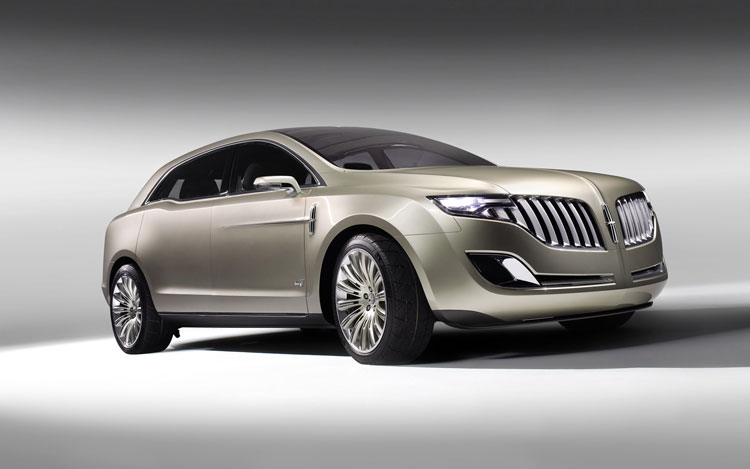
With Lincoln expected to get a version of the 2009 Ford Flex crossover, we can't help but think the Lincoln MKT concept is a preview of the car caught undergoing preliminary testing a couple weeks ago. Significantly, the MKT concept makes use of Ford's anticipated EcoBoost engine technology (formerly dubbed "Twin Force") in the form of a 3.5-liter V-6 which uses direct injection and turbocharging to produce the power of a V-8 with the fuel efficiency of a V-6.

The AWD concept's flex-fuel capable 3.5-liter V-6 makes 415 horsepower and 400 lb.-ft. of torque according to Ford, which is sent through a six-speed select-shift transmission. The MKT's EcoBoost tech will first be seen on a production vehicle with the Lincoln MKS sedan, which will produce about 340 horsepower and run on regular gas


In the spirit of responsible, environmentally-friendly luxury, the MKT uses Valox iQ and Xenoy iQ -- two oddly named recycled plastic materials -- in body panels, energy absorbers, wire bundles, and glazing. Ford says the material helps the vehicle resist heat and helps quell noise and vibration as well. The "green" theme continues inside with a banana silk rug and chromium-free leather seats. Four of those seats have been designed to resemble first-class airplane seats, with second-row heated and cooled thigh supports and footrests that allow lucky passengers to fully recline. The center console uses lighting technology that, Ford says, allowed designers to "project onto a contoured surface in 3-D." The instrument cluster uses carefully-positioned LEDs and was supposedly inspired by Swarovski crystals.

The MKT is attractive for a crossover and we hope Lincoln's production model can make as dramatic a transformation from the Ford Flex as the Buick Enclave has from its GMC and Saturn siblings. Lincoln's double-wing grille frames the Lincoln insignia and might be highlighted better with a darker color than the Liquid Bronze Metallic. The body side chamfer is an especially nice touch, as are the 21-inch, 14-spoke wheels. In the rear, Lincoln takes the MKX's lead with LED taillamps uninterrupted from one side to the other.

Lincoln's Flex: MKT Touring Vehicle Concept hints at upcoming crossover


With Lincoln expected to get a version of the 2009 Ford Flex crossover, we can't help but think the Lincoln MKT concept is a preview of the car caught undergoing preliminary testing a couple weeks ago. Significantly, the MKT concept makes use of Ford's anticipated EcoBoost engine technology (formerly dubbed "Twin Force") in the form of a 3.5-liter V-6 which uses direct injection and turbocharging to produce the power of a V-8 with the fuel efficiency of a V-6.

The AWD concept's flex-fuel capable 3.5-liter V-6 makes 415 horsepower and 400 lb.-ft. of torque according to Ford, which is sent through a six-speed select-shift transmission. The MKT's EcoBoost tech will first be seen on a production vehicle with the Lincoln MKS sedan, which will produce about 340 horsepower and run on regular gas


In the spirit of responsible, environmentally-friendly luxury, the MKT uses Valox iQ and Xenoy iQ -- two oddly named recycled plastic materials -- in body panels, energy absorbers, wire bundles, and glazing. Ford says the material helps the vehicle resist heat and helps quell noise and vibration as well. The "green" theme continues inside with a banana silk rug and chromium-free leather seats. Four of those seats have been designed to resemble first-class airplane seats, with second-row heated and cooled thigh supports and footrests that allow lucky passengers to fully recline. The center console uses lighting technology that, Ford says, allowed designers to "project onto a contoured surface in 3-D." The instrument cluster uses carefully-positioned LEDs and was supposedly inspired by Swarovski crystals.

The MKT is attractive for a crossover and we hope Lincoln's production model can make as dramatic a transformation from the Ford Flex as the Buick Enclave has from its GMC and Saturn siblings. Lincoln's double-wing grille frames the Lincoln insignia and might be highlighted better with a darker color than the Liquid Bronze Metallic. The body side chamfer is an especially nice touch, as are the 21-inch, 14-spoke wheels. In the rear, Lincoln takes the MKX's lead with LED taillamps uninterrupted from one side to the other.

Posted at 5:59 PM |  by Latest Innovations

0 comments:

Wednesday, January 16, 2008


MacBook Air is ultrathin, ultraportable, and ultra unlike anything else. But you don’t lose inches and pounds overnight. It’s the result of rethinking conventions. Of multiple wireless innovations. And of breakthrough design. With MacBook Air, mobile computing suddenly has a new standard.


A no-compromise display.
The glossy 13.3-inch, widescreen LED backlit MacBook Air display is the same viewable size as the screen on MacBook. The 1280-by-800 resolution gives you vibrant images and rich colors at full brightness the moment you open MacBook Air. So you get full-screen performance with all the benefits of a slim design.


Full-size, full-feature keyboard.
The keyboard is full-size with crisp keys just like the ones on MacBook. But MacBook Air goes further by adding backlit key illumination, making it easy to work in low-light settings such as airplanes and conference halls. A built-in ambient light sensor automatically adjusts keyboard and display brightness for optimal visibility. And with the oversize multi-touch trackpad, it just keeps getting better for fingers.
A built-in ambient light sensor automatically adjusts keyboard and display brightness for optimal visibility.


What makes the Air so thin?
MacBook Air is nearly as thin as your index finger. Practically every detail that could be streamlined has been. Yet it still has a 13.3-inch widescreen LED display, full-size keyboard, and large multi-touch trackpad. It’s incomparably portable without the usual ultraportable screen and keyboard compromises

Apple MacBook -Introducing world's thinnest notebook


MacBook Air is ultrathin, ultraportable, and ultra unlike anything else. But you don’t lose inches and pounds overnight. It’s the result of rethinking conventions. Of multiple wireless innovations. And of breakthrough design. With MacBook Air, mobile computing suddenly has a new standard.


A no-compromise display.
The glossy 13.3-inch, widescreen LED backlit MacBook Air display is the same viewable size as the screen on MacBook. The 1280-by-800 resolution gives you vibrant images and rich colors at full brightness the moment you open MacBook Air. So you get full-screen performance with all the benefits of a slim design.


Full-size, full-feature keyboard.
The keyboard is full-size with crisp keys just like the ones on MacBook. But MacBook Air goes further by adding backlit key illumination, making it easy to work in low-light settings such as airplanes and conference halls. A built-in ambient light sensor automatically adjusts keyboard and display brightness for optimal visibility. And with the oversize multi-touch trackpad, it just keeps getting better for fingers.
A built-in ambient light sensor automatically adjusts keyboard and display brightness for optimal visibility.


What makes the Air so thin?
MacBook Air is nearly as thin as your index finger. Practically every detail that could be streamlined has been. Yet it still has a 13.3-inch widescreen LED display, full-size keyboard, and large multi-touch trackpad. It’s incomparably portable without the usual ultraportable screen and keyboard compromises

Posted at 7:47 AM |  by Latest Innovations

0 comments:

Tuesday, January 15, 2008


Unveiled in fiery Passion Red finish and scheduled to debut at Detroit next week, this is an XC90 designed specifically for the more discerning consumer. Volvo R-Design is a new concept in refinement, first seen on V70, XC70 and S80 models, giving customers the higher levels of customisation now so prevalent in the industry. The new product line is seen by the firm to highlight their increasing focus on making their cars 'more extrovert and emotional' - and that it does.


Based on the XC90 Sport model, namely utilising its sport chassis, the R-Design version also pinches silk matt finish details, brushed steel sill mouldings and stylish blue-lit metal watch-style instrument dial faces. But exclusive to R-Design are 19-inch or optional 20-inch alloys, dual exhaust pipes and rear view mirror caps in a silk matt finish.

Further accentuating a more sporty vehicle is the removal of roof rails, which move to the options list. Exclusive R-Design badges stress the upgrade, splattering badging on the grille, on backrests and on the leather-trim steering wheel. Additional accents in the cabin include the perforated leather sports seats and contrasting cream-coloured strip on off-black Flex-Tec upholstery. An aluminium centre stack and door inlays provide a refined trim.


--------------------------------------------------------------------------------

Press Release
Volvo’s new sports inspired R-Design package is now available on the Volvo XC90 and is given its first public appearance at the North American International Auto Show this month. Already a popular specification on the Volvo C30, S40 and V50 models the R-Design package is made for customers who want a car with refined and expressive attributes and one which makes a bold statement on the road.

The R-Design package for the Volvo XC90 is an extension of the XC90 Sport model that was introduced in late 2006 and maintains many of the same prominent features such as Sport chassis, details in silk matt finish, sill mouldings in brushed stainless steel and instrument dials with metal chronograph watch-style faces and blue lighting.

However, R-Design brings a whole new expressive dimension with 19-inch alloy wheels as standard with an option to upgrade to 20-inch, dual exhaust pipes, skid-plate, the R-Design badge in the grille and rear view mirror caps in silk matt finish. To further accentuate the sporty nature and to create a sleeker appearance, the car is not fitted with roof rails, although these are still available as an option.

Inside the car, the seats are covered in off-black Flex-Tec with the seat cushion and backrest in contrasting cream-coloured leather; the perforated leather and sports seats with additional lateral cushioning support the driver even in faster cornering. The R-Design logo embossed on the backrest and the contrasting stitching reinforce the interior’s sporty appearance. Other R-Design interior details include the leather-trim steering wheel with its R-Design logo, aluminium pedals, specially designed aluminium centre stack and door inlays, gear selector and tufted dark sport floor mats with contrasting leather piping.

“R-Design is entirely in line with the accelerated focus on making our cars more extrovert and emotional. It gives the buyers the opportunity to spice up the already distinct personality of these car models,” says Steve Mattin, Senior Vice President and Design Director at Volvo Cars.

Volvo XC90 Gets R-Design Treatment


Unveiled in fiery Passion Red finish and scheduled to debut at Detroit next week, this is an XC90 designed specifically for the more discerning consumer. Volvo R-Design is a new concept in refinement, first seen on V70, XC70 and S80 models, giving customers the higher levels of customisation now so prevalent in the industry. The new product line is seen by the firm to highlight their increasing focus on making their cars 'more extrovert and emotional' - and that it does.


Based on the XC90 Sport model, namely utilising its sport chassis, the R-Design version also pinches silk matt finish details, brushed steel sill mouldings and stylish blue-lit metal watch-style instrument dial faces. But exclusive to R-Design are 19-inch or optional 20-inch alloys, dual exhaust pipes and rear view mirror caps in a silk matt finish.

Further accentuating a more sporty vehicle is the removal of roof rails, which move to the options list. Exclusive R-Design badges stress the upgrade, splattering badging on the grille, on backrests and on the leather-trim steering wheel. Additional accents in the cabin include the perforated leather sports seats and contrasting cream-coloured strip on off-black Flex-Tec upholstery. An aluminium centre stack and door inlays provide a refined trim.


--------------------------------------------------------------------------------

Press Release
Volvo’s new sports inspired R-Design package is now available on the Volvo XC90 and is given its first public appearance at the North American International Auto Show this month. Already a popular specification on the Volvo C30, S40 and V50 models the R-Design package is made for customers who want a car with refined and expressive attributes and one which makes a bold statement on the road.

The R-Design package for the Volvo XC90 is an extension of the XC90 Sport model that was introduced in late 2006 and maintains many of the same prominent features such as Sport chassis, details in silk matt finish, sill mouldings in brushed stainless steel and instrument dials with metal chronograph watch-style faces and blue lighting.

However, R-Design brings a whole new expressive dimension with 19-inch alloy wheels as standard with an option to upgrade to 20-inch, dual exhaust pipes, skid-plate, the R-Design badge in the grille and rear view mirror caps in silk matt finish. To further accentuate the sporty nature and to create a sleeker appearance, the car is not fitted with roof rails, although these are still available as an option.

Inside the car, the seats are covered in off-black Flex-Tec with the seat cushion and backrest in contrasting cream-coloured leather; the perforated leather and sports seats with additional lateral cushioning support the driver even in faster cornering. The R-Design logo embossed on the backrest and the contrasting stitching reinforce the interior’s sporty appearance. Other R-Design interior details include the leather-trim steering wheel with its R-Design logo, aluminium pedals, specially designed aluminium centre stack and door inlays, gear selector and tufted dark sport floor mats with contrasting leather piping.

“R-Design is entirely in line with the accelerated focus on making our cars more extrovert and emotional. It gives the buyers the opportunity to spice up the already distinct personality of these car models,” says Steve Mattin, Senior Vice President and Design Director at Volvo Cars.

Posted at 6:24 AM |  by Latest Innovations

0 comments:


An "F" logo on each of its front fenders, indicating belonging to Lexus' exclusive "F" brand, and its aerodynamic form set off in a fiery red paintjob, there's little to stop this little number stealing the show this week. After all, that's what its 200 mph lightweight predecessor, the LF-A Coupe Concept, did at Detroit last time around.


Unsurprisingly named 'LF-A Roadster', this concept's as capable as the last. Lopping off the roof has failed to lessen the rigidity and structure strength of the coupe on which the new model is based, with much of the body consisting of lightweight but durable carbon-fiber and aluminium panels. And in conjunction with the same high-revving V10 engine used in its coupe counterpart, performance is naturally in another league. With a 5.0-litre displacement and generating in excess of 500 galloping horses, test-track speeds of more than 200 mph are achievable - thanks partly to a tuned weight distribution placing the engine behind the front axle but forward of the passenger compartment. The engineers are calling it a 'front-mid' configuration. We'll simply call it clever.

Styling comes from that of the coupe concept LF-A, fortunately requiring few aesthetic modifications. A stern member of the L-Finesse design philosophy, the LF-A Roadster has a compact, low-profile front end that tailors to a similarly near-identical rear encompassing rear vents, a sharp tailgate and now more elongated rear lamps. New at the rear is a rear wing that raises at speed for required greater downforce, while cool air feeds the radiators via two large air intakes, which are carried over from its forerunner. Standing only 48 inches tall much like the coupe, a low-profile stance is visually aided by twenty-inch alloy wheels.


With the coupe concept having been given the green light for production in both V10 and hybrid guise only last year, expect crowd reactions and those of press to be a key deciding factor in the approval of any future Roadster model.


--------------------------------------------------------------------------------

Press Release
Detroit, MI - The engineers and designers at Lexus continue to use their groundbreaking LF-A premium sports car concept as a medium for expressing their ideas about what a high-performance sporting vehicle not only can be, but should be. In this latest expression of the LF-A, they have removed the car's top to create a high-performance roadster.

The LF-A Roadster is based on the sturdy yet lightweight carbon-fiber and aluminum body used for the LF-A coupe, which helps maintain the structure's strength and rigidity even without a top.

Like its coupe counterpart, the LF-A Roadster is powered by a high-revving V10 engine that approaches 5.0 liters in displacement. The V10, capable of more than 500 horsepower and test-track speeds greater than 200 mph, is mounted in front of the passenger compartment but behind the front-axle centerline in what the LF-A's engineers refer to as a "front-mid" configuration.

The engine is connected via a torque tube and propeller shaft to a transaxle that is controlled by paddle shifters. The torque tube is a structural member that adds rigidity to the drivetrain and chassis while also reducing vibration.

Styling is rooted in the Lexus L-Finesse design philosophy, conferring the LF-A Roadster's front end with a compact, low-profile, aerodynamic shape. Like its coupe counterpart, the LF-A Roadster stands just 48 inches tall, but the Roadster configuration adds a speed adaptive rear wing.

The rear is marked by a pair of wrap-around, arrowhead-shaped taillights that bracket a pair of large grilles. These grilles vent the heated air from the car's two rear-mounted radiators into the LF-A Roadster's aerodynamic wake. The radiators are fed cool air by two large intake ducts mounted just above the rear wheel wells. This aft radiator positioning not only allowed the designers to keep the car's front profile low and tight but also aided the LF-A's chassis engineers in their search for optimal weight distribution.

Helping to provide balance and scale to the design, which features an overall length of 175.6 inches and a wheelbase of 102.6 inches, are high-performance tires on turbine-styled alloy wheels. The front tires are 265/35R20s, while the rears are 305/30R20s. Like the LF-A coupe, the brakes consist of 14.2-inch cross-drilled, vented discs up front, and 13.6-inch cross-drilled, vented discs at the rear. The front brake calipers are six-piston units and the rear calipers use four pistons each.

An "F" logo, located on each front fender of the Roadster, indicates the vehicle's status as a part of the new "F" marque. The name is derived from the original "F" designation for the first Lexus LS prototype. That vehicle was internally coded "Circle-F," with the "F" standing for "flagship." The Circle-F designation further evolved into the code name Flagship One, or F1, and the first F1 concept developed into Lexus' first vehicle, the LS. Since then, the "F" code has come to signify a special vehicle program within Lexus that falls outside the normal engineering and development process. In addition, Fuji Speedway is the IS F's home circuit, and the shape of the F-logo was inspired by many of the track's turns. The all-new Lexus IS F sport sedan is the first production vehicle to carry the F marque.

Detroit Auto Show: Lexus LF-A Roadster Revealed


An "F" logo on each of its front fenders, indicating belonging to Lexus' exclusive "F" brand, and its aerodynamic form set off in a fiery red paintjob, there's little to stop this little number stealing the show this week. After all, that's what its 200 mph lightweight predecessor, the LF-A Coupe Concept, did at Detroit last time around.


Unsurprisingly named 'LF-A Roadster', this concept's as capable as the last. Lopping off the roof has failed to lessen the rigidity and structure strength of the coupe on which the new model is based, with much of the body consisting of lightweight but durable carbon-fiber and aluminium panels. And in conjunction with the same high-revving V10 engine used in its coupe counterpart, performance is naturally in another league. With a 5.0-litre displacement and generating in excess of 500 galloping horses, test-track speeds of more than 200 mph are achievable - thanks partly to a tuned weight distribution placing the engine behind the front axle but forward of the passenger compartment. The engineers are calling it a 'front-mid' configuration. We'll simply call it clever.

Styling comes from that of the coupe concept LF-A, fortunately requiring few aesthetic modifications. A stern member of the L-Finesse design philosophy, the LF-A Roadster has a compact, low-profile front end that tailors to a similarly near-identical rear encompassing rear vents, a sharp tailgate and now more elongated rear lamps. New at the rear is a rear wing that raises at speed for required greater downforce, while cool air feeds the radiators via two large air intakes, which are carried over from its forerunner. Standing only 48 inches tall much like the coupe, a low-profile stance is visually aided by twenty-inch alloy wheels.


With the coupe concept having been given the green light for production in both V10 and hybrid guise only last year, expect crowd reactions and those of press to be a key deciding factor in the approval of any future Roadster model.


--------------------------------------------------------------------------------

Press Release
Detroit, MI - The engineers and designers at Lexus continue to use their groundbreaking LF-A premium sports car concept as a medium for expressing their ideas about what a high-performance sporting vehicle not only can be, but should be. In this latest expression of the LF-A, they have removed the car's top to create a high-performance roadster.

The LF-A Roadster is based on the sturdy yet lightweight carbon-fiber and aluminum body used for the LF-A coupe, which helps maintain the structure's strength and rigidity even without a top.

Like its coupe counterpart, the LF-A Roadster is powered by a high-revving V10 engine that approaches 5.0 liters in displacement. The V10, capable of more than 500 horsepower and test-track speeds greater than 200 mph, is mounted in front of the passenger compartment but behind the front-axle centerline in what the LF-A's engineers refer to as a "front-mid" configuration.

The engine is connected via a torque tube and propeller shaft to a transaxle that is controlled by paddle shifters. The torque tube is a structural member that adds rigidity to the drivetrain and chassis while also reducing vibration.

Styling is rooted in the Lexus L-Finesse design philosophy, conferring the LF-A Roadster's front end with a compact, low-profile, aerodynamic shape. Like its coupe counterpart, the LF-A Roadster stands just 48 inches tall, but the Roadster configuration adds a speed adaptive rear wing.

The rear is marked by a pair of wrap-around, arrowhead-shaped taillights that bracket a pair of large grilles. These grilles vent the heated air from the car's two rear-mounted radiators into the LF-A Roadster's aerodynamic wake. The radiators are fed cool air by two large intake ducts mounted just above the rear wheel wells. This aft radiator positioning not only allowed the designers to keep the car's front profile low and tight but also aided the LF-A's chassis engineers in their search for optimal weight distribution.

Helping to provide balance and scale to the design, which features an overall length of 175.6 inches and a wheelbase of 102.6 inches, are high-performance tires on turbine-styled alloy wheels. The front tires are 265/35R20s, while the rears are 305/30R20s. Like the LF-A coupe, the brakes consist of 14.2-inch cross-drilled, vented discs up front, and 13.6-inch cross-drilled, vented discs at the rear. The front brake calipers are six-piston units and the rear calipers use four pistons each.

An "F" logo, located on each front fender of the Roadster, indicates the vehicle's status as a part of the new "F" marque. The name is derived from the original "F" designation for the first Lexus LS prototype. That vehicle was internally coded "Circle-F," with the "F" standing for "flagship." The Circle-F designation further evolved into the code name Flagship One, or F1, and the first F1 concept developed into Lexus' first vehicle, the LS. Since then, the "F" code has come to signify a special vehicle program within Lexus that falls outside the normal engineering and development process. In addition, Fuji Speedway is the IS F's home circuit, and the shape of the F-logo was inspired by many of the track's turns. The all-new Lexus IS F sport sedan is the first production vehicle to carry the F marque.

Posted at 6:22 AM |  by Latest Innovations

0 comments:


Volkswagen have premiered their all-new Passat CC at Detroit today, presenting it as a car 'anything but mainstream'. Based off the Passat platform, the new coupe is a model whose concept is based around that of the Mercedes CLS, Volkswagen maintaining its new CC is a vehicle 'embracing differences'; from comfort to dynamism and from sporty interior to a spacious one.


Riding 5cm lower than a standard Passat and lengthened by some 3cm, the new CC has an accentuated fluid design and a more sporting stance, while sharing no body panels with that of its sedan counterpart. Suiting the car's sweeping lines is a new panoramic glass roof, providing an airier cabin.

The initial engine line-up will consist of a 160 hp 1.8-litre TSI unit with the range topped by a 3.6-litre V6 FSI model producing 300 hp. Following its European launch in the second quarter of 2008 and in the fourth quarter for North American markets, a 2.0-litre turbocharged FSI engine is likely to join the range. Power is mated to Volkswagen's seven-speed DSG gearbox, while drive is sent to solely the front wheels or optionally to all.


--------------------------------------------------------------------------------

Press Release
Just a few days into the New Year Volkswagen is setting off its latest firework with today’s world-exclusive launch of the new four-door Passat CC at the North American International Auto Show. A car that is anything but mainstream.

The new Volkswagen embraces differences. It is a coupé, yet has four doors; it offers supreme comfort whilst at the same time oozing pure dynamism. Its sporty interior is uncompromising yet spacious.

The completely redesigned bodywork captivates with its silhouette of fluid lines. The roof stretches powerfully in a flat radius from the windscreen to the rear. A characteristic element of the design is the sharp tornado line drawn below the lower edge of the windows. Another new development is the panoramic glass roof which offers an overhead view.

The Passat, a proven success for more than three decades, forms the technical basis for the first four-door coupé by Volkswagen. The Passat CC comes exclusively with state-of-the-art direct injection engines (118 kW / 160 PS to 220 kW / 300 PS). A globally unique feature is the new lane hold assist system. If the vehicle appears to be inadvertently leaving the lane, the assistance system provides corrective steer control. The sportiness of a coupé is married to the comfort of a top-of-the-range saloon through the common denominator of automatic running gear adjustment, Dynamic Drive Control (DDC).

The core markets are North America, Western Europe and Japan. The Passat CC, built in the German Volkswagen plant in Emden, will initially be launched in the second quarter of the year in Europe and then from the fourth quarter in the USA and Canada and later Japan.


To the Point: Passat CC
Volkswagen is opening the year 2008 with the world premiere of the Passat CC. Its identifying characteristics: coupé design, yet with four doors; impressive comfort, yet pure dynamics; sporty interior, yet space without compromises. The interplay of these contrasts has resulted in a car whose concept and design set a new course beyond the mainstream. At the same time, the Passat CC is a progressive technological platform with high-class engines (103 kW / 140 PS to 220 kW / 300 PS) and innovative assistance and driving dynamics systems. These include world firsts in the "Lane Assist" lane keeping system and the "Dynamic Drive Control" electronic chassis control system. No less innovative: the "Park Assist" parking assistant and "ACC Automatic Distance Control" with stopping distance reducing "Front Scan".

Lane "Assist": This active lane keeping system on the Passat CC is unique worldwide in this vehicle class. It automatically counter-steers as soon as the Passat CC leaves its lane unintentionally; a genuine gain in convenience and safety. About 14 percent of all accidents involving injuries are caused by the vehicle leaving its driving lane. "Lane Assist" will contribute to reducing this accident rate. By the way, if the driver sets the turn signal to intentionally change lanes, "Lane Assist" does not intervene.

"Dynamic Drive Control": The car’s new "Dynamic Drive Control" (DDC) chassis control system combines the sportiness of a coupé and the comfort of a top sedan in one car. In parallel to tuning of the suspension’s damping characteristic, the power steering system is controlled too. "DDC" offers the three programs "Normal", "Sport" and "Comfort". Decisive here is the fact that Dynamic Drive Control improves comfort and dynamic properties in the "Normal" mode too – and therefore full-time. In certain markets, "DDC" is on-board as standard equipment on all versions starting at 125 kW / 170 PS.

"Park Assist": Another high-end technology is the "Park Assist" parking assistance system. It automatically guides the Passat CC into a parking space at the push of a button. The driver no longer needs to steer in this case, but instead just accelerates and brakes.

"ACC Automatic Distance Control": When "ACC" is activated, the Passat CC automatically brakes and accelerates within a speed range input by the car driver beforehand. Thanks to "Front Scan", the system also avoids frontal collisions. It uses a radar sensor to monitor the distance to other vehicles in traffic in front of the Passat CC. In advance of certain situations, "Front Scan" preventively places the brakes in a preconditioned state, thereby performing a stopping distance reduction function.

Furthermore, the Passat CC is putting on a whole display of fascinating fireworks with other innovative detailed solutions. These include small details that have tremendous impact. Such as the unique guide system for the side windows in the frameless coupé doors, which do not offer any surfaces for the wind to catch hold. No less impressive is the climate control feature for the car’s seats (active climate seat). Until now this comfort feature was reserved for the Phaeton luxury sedan. In summer months the active climate seat supplies noticeably improved comfort on long drives.

Another perfect example of attention to the smallest detail is the newly designed Mobility Tire System: from a purely statistical viewpoint car drivers experience a flat tire every 100,000 kilometers. On the Passat CC with "Mobility Tires", it is estimated that this value could be increased to 500,000 kilometers, since a highly flexible rubber mixture encapsulates the penetrating object and keeps the tire sealed. Also providing for a plus in safety are the up to eight airbags, ESP electronic stabilization program and an extremely high-strength body.

The Passat CC is positioned in the premium range of mid-class cars, in this case the sporty sedans and coupés. However, based on its dimensions (4.8 meters length) and uncompromising layout of comfort and quality properties, the car breaks through class boundaries to the upper mid-class. Its core markets are North America, Western Europe and Japan. The Passat CC – built at the German Volkswagen plant in Emden – will initially be introduced in Europe in the second quarter of the year. Following in the fourth quarter will be the USA and Canada, then Japan.

Volkswagen Passat CC Four-Door Coupe Revealed at Detroit


Volkswagen have premiered their all-new Passat CC at Detroit today, presenting it as a car 'anything but mainstream'. Based off the Passat platform, the new coupe is a model whose concept is based around that of the Mercedes CLS, Volkswagen maintaining its new CC is a vehicle 'embracing differences'; from comfort to dynamism and from sporty interior to a spacious one.


Riding 5cm lower than a standard Passat and lengthened by some 3cm, the new CC has an accentuated fluid design and a more sporting stance, while sharing no body panels with that of its sedan counterpart. Suiting the car's sweeping lines is a new panoramic glass roof, providing an airier cabin.

The initial engine line-up will consist of a 160 hp 1.8-litre TSI unit with the range topped by a 3.6-litre V6 FSI model producing 300 hp. Following its European launch in the second quarter of 2008 and in the fourth quarter for North American markets, a 2.0-litre turbocharged FSI engine is likely to join the range. Power is mated to Volkswagen's seven-speed DSG gearbox, while drive is sent to solely the front wheels or optionally to all.


--------------------------------------------------------------------------------

Press Release
Just a few days into the New Year Volkswagen is setting off its latest firework with today’s world-exclusive launch of the new four-door Passat CC at the North American International Auto Show. A car that is anything but mainstream.

The new Volkswagen embraces differences. It is a coupé, yet has four doors; it offers supreme comfort whilst at the same time oozing pure dynamism. Its sporty interior is uncompromising yet spacious.

The completely redesigned bodywork captivates with its silhouette of fluid lines. The roof stretches powerfully in a flat radius from the windscreen to the rear. A characteristic element of the design is the sharp tornado line drawn below the lower edge of the windows. Another new development is the panoramic glass roof which offers an overhead view.

The Passat, a proven success for more than three decades, forms the technical basis for the first four-door coupé by Volkswagen. The Passat CC comes exclusively with state-of-the-art direct injection engines (118 kW / 160 PS to 220 kW / 300 PS). A globally unique feature is the new lane hold assist system. If the vehicle appears to be inadvertently leaving the lane, the assistance system provides corrective steer control. The sportiness of a coupé is married to the comfort of a top-of-the-range saloon through the common denominator of automatic running gear adjustment, Dynamic Drive Control (DDC).

The core markets are North America, Western Europe and Japan. The Passat CC, built in the German Volkswagen plant in Emden, will initially be launched in the second quarter of the year in Europe and then from the fourth quarter in the USA and Canada and later Japan.


To the Point: Passat CC
Volkswagen is opening the year 2008 with the world premiere of the Passat CC. Its identifying characteristics: coupé design, yet with four doors; impressive comfort, yet pure dynamics; sporty interior, yet space without compromises. The interplay of these contrasts has resulted in a car whose concept and design set a new course beyond the mainstream. At the same time, the Passat CC is a progressive technological platform with high-class engines (103 kW / 140 PS to 220 kW / 300 PS) and innovative assistance and driving dynamics systems. These include world firsts in the "Lane Assist" lane keeping system and the "Dynamic Drive Control" electronic chassis control system. No less innovative: the "Park Assist" parking assistant and "ACC Automatic Distance Control" with stopping distance reducing "Front Scan".

Lane "Assist": This active lane keeping system on the Passat CC is unique worldwide in this vehicle class. It automatically counter-steers as soon as the Passat CC leaves its lane unintentionally; a genuine gain in convenience and safety. About 14 percent of all accidents involving injuries are caused by the vehicle leaving its driving lane. "Lane Assist" will contribute to reducing this accident rate. By the way, if the driver sets the turn signal to intentionally change lanes, "Lane Assist" does not intervene.

"Dynamic Drive Control": The car’s new "Dynamic Drive Control" (DDC) chassis control system combines the sportiness of a coupé and the comfort of a top sedan in one car. In parallel to tuning of the suspension’s damping characteristic, the power steering system is controlled too. "DDC" offers the three programs "Normal", "Sport" and "Comfort". Decisive here is the fact that Dynamic Drive Control improves comfort and dynamic properties in the "Normal" mode too – and therefore full-time. In certain markets, "DDC" is on-board as standard equipment on all versions starting at 125 kW / 170 PS.

"Park Assist": Another high-end technology is the "Park Assist" parking assistance system. It automatically guides the Passat CC into a parking space at the push of a button. The driver no longer needs to steer in this case, but instead just accelerates and brakes.

"ACC Automatic Distance Control": When "ACC" is activated, the Passat CC automatically brakes and accelerates within a speed range input by the car driver beforehand. Thanks to "Front Scan", the system also avoids frontal collisions. It uses a radar sensor to monitor the distance to other vehicles in traffic in front of the Passat CC. In advance of certain situations, "Front Scan" preventively places the brakes in a preconditioned state, thereby performing a stopping distance reduction function.

Furthermore, the Passat CC is putting on a whole display of fascinating fireworks with other innovative detailed solutions. These include small details that have tremendous impact. Such as the unique guide system for the side windows in the frameless coupé doors, which do not offer any surfaces for the wind to catch hold. No less impressive is the climate control feature for the car’s seats (active climate seat). Until now this comfort feature was reserved for the Phaeton luxury sedan. In summer months the active climate seat supplies noticeably improved comfort on long drives.

Another perfect example of attention to the smallest detail is the newly designed Mobility Tire System: from a purely statistical viewpoint car drivers experience a flat tire every 100,000 kilometers. On the Passat CC with "Mobility Tires", it is estimated that this value could be increased to 500,000 kilometers, since a highly flexible rubber mixture encapsulates the penetrating object and keeps the tire sealed. Also providing for a plus in safety are the up to eight airbags, ESP electronic stabilization program and an extremely high-strength body.

The Passat CC is positioned in the premium range of mid-class cars, in this case the sporty sedans and coupés. However, based on its dimensions (4.8 meters length) and uncompromising layout of comfort and quality properties, the car breaks through class boundaries to the upper mid-class. Its core markets are North America, Western Europe and Japan. The Passat CC – built at the German Volkswagen plant in Emden – will initially be introduced in Europe in the second quarter of the year. Following in the fourth quarter will be the USA and Canada, then Japan.

Posted at 6:21 AM |  by Latest Innovations

0 comments:


MSRP of USD 15,650
The new Scion xB will have a new limited edition model on offer starting this February. The Scion xB Release Series 5.0 will be limited to 2,500 units and has an MSRP of USD 15,650 if you choose the manual transmission and USD 16,600 for the automatic version.

The Scion xB RS 5.0 features a Gold Rush Mica paint job, which is the same colour as last year's xB display vehicle from the Chicago Show. Furthermore the RX 5.0 xB features a Kenstyle body kit, new wheel covers, moonroof, rear spoiler and colour matching interior.


--------------------------------------------------------------------------------

Press Release
Scion Announces Pricing For xB Release Series 5.0
Scion, of Toyota Motor Sales, U.S.A., Inc., announced today that the first limited-production Scion for 2008, the xB Release Series 5.0 (xB R.S. 5.0), will be available at dealer showrooms beginning in Feburary.

The 2008 xB Release Series 5.0 features dazzling Gold Rush Mica exterior paint inspired by last year's Chicago Auto Show xB display vehicle. This limited edition xB features a KenStyle® body kit, new Release Series wheel covers, and a moonroof, an xB first. A color-keyed rear spoiler will also be available.

Inside, the xB features a Gold Rush Mica accented interior trim and color-tuned seat fabric. Individual numbered badging completes the uniqueness of this vehicle.

Only 2,500 units of the xB Release Series 5.0 will be built. The xB Release Series 5.0 model will carry a manufacturer's suggested retail price (MSRP) of $2,470 over the base price of the xB. The manual transmission xB has a base MSRP of $15,650, while the MSRP for automatic transmission model is $16,600. The available color-keyed spoiler has an MSRP of $320.

The delivery, processing and handling (DPH) fee for all Scion models is $620 and is not included in the MSRP. DPH fee for vehicles distributed by Southeast Toyota (SET) and Gulf States Toyota (GST) may vary.
A 2008 xB Release Series 5.0 will be on display in the Scion booth at the North American International Auto Show in Detroit

Scion xB Release Series 5.0 at Detroit


MSRP of USD 15,650
The new Scion xB will have a new limited edition model on offer starting this February. The Scion xB Release Series 5.0 will be limited to 2,500 units and has an MSRP of USD 15,650 if you choose the manual transmission and USD 16,600 for the automatic version.

The Scion xB RS 5.0 features a Gold Rush Mica paint job, which is the same colour as last year's xB display vehicle from the Chicago Show. Furthermore the RX 5.0 xB features a Kenstyle body kit, new wheel covers, moonroof, rear spoiler and colour matching interior.


--------------------------------------------------------------------------------

Press Release
Scion Announces Pricing For xB Release Series 5.0
Scion, of Toyota Motor Sales, U.S.A., Inc., announced today that the first limited-production Scion for 2008, the xB Release Series 5.0 (xB R.S. 5.0), will be available at dealer showrooms beginning in Feburary.

The 2008 xB Release Series 5.0 features dazzling Gold Rush Mica exterior paint inspired by last year's Chicago Auto Show xB display vehicle. This limited edition xB features a KenStyle® body kit, new Release Series wheel covers, and a moonroof, an xB first. A color-keyed rear spoiler will also be available.

Inside, the xB features a Gold Rush Mica accented interior trim and color-tuned seat fabric. Individual numbered badging completes the uniqueness of this vehicle.

Only 2,500 units of the xB Release Series 5.0 will be built. The xB Release Series 5.0 model will carry a manufacturer's suggested retail price (MSRP) of $2,470 over the base price of the xB. The manual transmission xB has a base MSRP of $15,650, while the MSRP for automatic transmission model is $16,600. The available color-keyed spoiler has an MSRP of $320.

The delivery, processing and handling (DPH) fee for all Scion models is $620 and is not included in the MSRP. DPH fee for vehicles distributed by Southeast Toyota (SET) and Gulf States Toyota (GST) may vary.
A 2008 xB Release Series 5.0 will be on display in the Scion booth at the North American International Auto Show in Detroit

Posted at 6:17 AM |  by Latest Innovations

0 comments:


The not-so-elusive BMW X6 was officially unveiled to the United States at the North American International Auto Show. Dubbed a "Sport Activity Coupe," the X6 combines curvy sedan-like styling with the raised ride height and xDrive all-wheel drive system of BMW's X-series vehicles. The expressive styling and 21" wheels help to mask the X6' size at first glance. A new all-aluminum 4.4 liter twin-turbo V8 produces 400 horsepower and uses direct gasoline injection. BMW claims a 0-60 time of under five and a half seconds. A 300-horsepower 3.0 liter twin-turbo straight six is also available.

To improve its sporting characteristics, the X6 features the Dynamic Performance Control chassis control system, an outgrowth of xDrive which varies power front to rear and side to side to maintain stability and traction.

In keeping with the overwhelming environmental theme of this year's Detroit show, BMW also unveiled the ActiveHybrid concept. This X6-based hybrid-electric uses the two-mode active-transmission hybrid system that was jointly developed with GM and DaimlerChrysler.

BMW X6 Production Version Debuts at NAIAS


The not-so-elusive BMW X6 was officially unveiled to the United States at the North American International Auto Show. Dubbed a "Sport Activity Coupe," the X6 combines curvy sedan-like styling with the raised ride height and xDrive all-wheel drive system of BMW's X-series vehicles. The expressive styling and 21" wheels help to mask the X6' size at first glance. A new all-aluminum 4.4 liter twin-turbo V8 produces 400 horsepower and uses direct gasoline injection. BMW claims a 0-60 time of under five and a half seconds. A 300-horsepower 3.0 liter twin-turbo straight six is also available.

To improve its sporting characteristics, the X6 features the Dynamic Performance Control chassis control system, an outgrowth of xDrive which varies power front to rear and side to side to maintain stability and traction.

In keeping with the overwhelming environmental theme of this year's Detroit show, BMW also unveiled the ActiveHybrid concept. This X6-based hybrid-electric uses the two-mode active-transmission hybrid system that was jointly developed with GM and DaimlerChrysler.

Posted at 6:16 AM |  by Latest Innovations

0 comments:


The 2008 Saab 9-3 lineup includes six models, starting with the 2.0T sedan ($28,385) packing the turbo four-cylinder engine. The 2.0T is available with a choice of six-speed manual, five-speed automatic or six-speed automatic.
The 2.0T Convertible ($39,710) and 2.0T SportCombi wagon ($29,630) are similarly equipped.

The Aero models all carry turbocharged V6 engines and some additional standard equipment here and there, and are restricted to the six-speed automatic transmission only. The Aero V6 sedan ($35,365), the Aero V6 convertible ($45,665), and the Aero V6 SportCombi wagon ($36,265) are similarly equipped. All models come with a $745 destination charge built into the stated price. When you buy an Aero version of any model, a two-day trip to the Saab Aero Academy driving school at Road Atlanta is included.

Options include a moonroof package ($1200), a premium package ($1695), cold weather package ($550), and a touring package ($895). There are two levels of navigation systems, at $2145 and $2840, two levels of sound system upgrade with CD changer, $895 and $995, metallic paint ($550), a roof rack ($250), leather upholstery ($1500), automatic transmission ($1350), and five-spoke alloy wheels ($750).

When the XWD (cross-wheel-drive) versions arrive this winter, they will come only as Aero V6 models, and they will come only with a special high-output, high-boost-turbo engine package that makes 280 horsepower and 295 foot-pounds of torque. Although prices haven't been set yet for this new top-of-the-range model, we expect it to be about $2000 more for the big engine and all-wheel-drive system. It will be available on the sedan and SportCombi versions, but not on the convertible, which uses a reinforced floor pan that won't accommodate the rear-axle assembly for the drive system.

Safety features include front, side and curtain airbags, ABS, traction control, and electronic stability control as an option. With its crash-resistant structure and features, the 9-3 has been awarded a Top Safety Pick by the Insurance Institute for Highway Safety (IIHS) for three years in a r

2008 Saab 9-3 Review


The 2008 Saab 9-3 lineup includes six models, starting with the 2.0T sedan ($28,385) packing the turbo four-cylinder engine. The 2.0T is available with a choice of six-speed manual, five-speed automatic or six-speed automatic.
The 2.0T Convertible ($39,710) and 2.0T SportCombi wagon ($29,630) are similarly equipped.

The Aero models all carry turbocharged V6 engines and some additional standard equipment here and there, and are restricted to the six-speed automatic transmission only. The Aero V6 sedan ($35,365), the Aero V6 convertible ($45,665), and the Aero V6 SportCombi wagon ($36,265) are similarly equipped. All models come with a $745 destination charge built into the stated price. When you buy an Aero version of any model, a two-day trip to the Saab Aero Academy driving school at Road Atlanta is included.

Options include a moonroof package ($1200), a premium package ($1695), cold weather package ($550), and a touring package ($895). There are two levels of navigation systems, at $2145 and $2840, two levels of sound system upgrade with CD changer, $895 and $995, metallic paint ($550), a roof rack ($250), leather upholstery ($1500), automatic transmission ($1350), and five-spoke alloy wheels ($750).

When the XWD (cross-wheel-drive) versions arrive this winter, they will come only as Aero V6 models, and they will come only with a special high-output, high-boost-turbo engine package that makes 280 horsepower and 295 foot-pounds of torque. Although prices haven't been set yet for this new top-of-the-range model, we expect it to be about $2000 more for the big engine and all-wheel-drive system. It will be available on the sedan and SportCombi versions, but not on the convertible, which uses a reinforced floor pan that won't accommodate the rear-axle assembly for the drive system.

Safety features include front, side and curtain airbags, ABS, traction control, and electronic stability control as an option. With its crash-resistant structure and features, the 9-3 has been awarded a Top Safety Pick by the Insurance Institute for Highway Safety (IIHS) for three years in a r

Posted at 6:07 AM |  by Latest Innovations

0 comments:

Monday, January 14, 2008


The first press day at the 2008 Detroit Auto Show is just ending and as we're going live with the second wave of photos from today, it's great to hear our Chargers are going to the show in New England.

Be sure to view the entire gallery to see new car intros from Audi, BMW, Lexus, Hyundai and others.

2008 Audi R8


The first press day at the 2008 Detroit Auto Show is just ending and as we're going live with the second wave of photos from today, it's great to hear our Chargers are going to the show in New England.

Be sure to view the entire gallery to see new car intros from Audi, BMW, Lexus, Hyundai and others.

Posted at 6:29 AM |  by Latest Innovations

0 comments:

Friday, January 11, 2008

Tata Company Chairman Ratan Tata announces the newly launched Tata Nano at the 9th Auto Expo in New Delhi, India, Thursday, Jan. 10, 2008. India’s Tata Motors unveiled its much anticipated US$2,500 car, an ultracheap price tag that suddenly brings car ownership into the reach of tens of millions of people across the world

$2500 Dollar Car-TATA Nano

Tata Company Chairman Ratan Tata announces the newly launched Tata Nano at the 9th Auto Expo in New Delhi, India, Thursday, Jan. 10, 2008. India’s Tata Motors unveiled its much anticipated US$2,500 car, an ultracheap price tag that suddenly brings car ownership into the reach of tens of millions of people across the world

Posted at 6:35 PM |  by Latest Innovations

0 comments:


The most awaited Rs. 1 Lakh car from Tata was unveiled at AutoExpo 2008 in New Delhi. Ever since Tata announced the launch of their Rs. 1 Lakh car (US $2500), everybody was eager to see how the car would look and what it would be like to drive that car. Well finally that curiousity is over. Tata's Rs. 1 Lakh Car is called Tata Nano. Now not only Tata but Bajaj also launched its small car (Bajaj Rs. 1 Lakh Car) Bajaj Lite.

Tata Nano Engine cost would be around Rs. 28,000 and would have around 30 to 35 hoursepower. Tata Nano will not have power steering, power windows, air-condititioning (most of the car owners go for aftermarket AC already). The instrument panel would have only speedometer, odometer and fuel gauge. No fancy trip counter or fancy temperature gauge or light indicators. The car is so small that it would have only one windshield wiper.
As the world awaits the formal rollout of Tata Nano from the Singur factory in West Bengal, car buying dynamics in India seem to be undergoing a subtle change.

Most believe Nano’s price is very attractive and affordable. People who own entry-level cars are now thinking of going in for either one Nano — in view of its fuel efficiency — or maybe two, which will cost the same as their existing car. So, there would be one car for the head of the family and another for the family.

Take the case of Sudarshana Sarkar. The school teacher has already enquired about Nano at a city-based Tata dealer. “I particularly liked the yellow Nano. It has a style of its own. It’s affordable and looks quite comfortable. It’s good for a small family. I am keen to know when bookings will kick off,” she said.

Tata dealers are flooded with queries from prospective buyers. “Nano will be a runaway hit. People, mainly the middle-class, are anxiously waiting for it. After it was unveiled on Thursday, we have started receiving thousands of calls from potential buyers,” said Binod Agarwal of Lexus Motors. Not surprising, considering the country’s middle-class numbers several million.

Small car owners are upbeat too. “It’s not a bad option to have a Nano for the family. After all, Ratan Tata did assert the car meets all safety standards. So my children can go to school and my wife for her shopping in Nano,” said small-time businessman Apurv Shah.

Prodyut Mitra, an employee with United Bank of India, seconded the emotion: “I commute by a motorcycle and am keen to buy a Nano. I hope banks will come up with soft financing options for the car.”

Sahana Ganguly, a home maker, is, however, more cautious. “It’s an affordable car, no doubt. But I would rather wait a year before buying it, just to see what the experience is like,” she said. It’s a different matter though that after a year, the car’s price may be revised, if the company wants to mark it to the market vis-a-vis raw material input prices.

The car’s nano space requirement for parking is believed to be yet another purchase point trigger. “Three Nanos can easily fit into the space occupied by two Ambassadors,” an auto analyst quipped.

“Two Nanos can be effortlessly parked in a typical Scorpio parking slot. So, in metros, where parking is a huge problem, Nano could be a hit,” he added.

TATA Unveils TATA NANO


The most awaited Rs. 1 Lakh car from Tata was unveiled at AutoExpo 2008 in New Delhi. Ever since Tata announced the launch of their Rs. 1 Lakh car (US $2500), everybody was eager to see how the car would look and what it would be like to drive that car. Well finally that curiousity is over. Tata's Rs. 1 Lakh Car is called Tata Nano. Now not only Tata but Bajaj also launched its small car (Bajaj Rs. 1 Lakh Car) Bajaj Lite.

Tata Nano Engine cost would be around Rs. 28,000 and would have around 30 to 35 hoursepower. Tata Nano will not have power steering, power windows, air-condititioning (most of the car owners go for aftermarket AC already). The instrument panel would have only speedometer, odometer and fuel gauge. No fancy trip counter or fancy temperature gauge or light indicators. The car is so small that it would have only one windshield wiper.
As the world awaits the formal rollout of Tata Nano from the Singur factory in West Bengal, car buying dynamics in India seem to be undergoing a subtle change.

Most believe Nano’s price is very attractive and affordable. People who own entry-level cars are now thinking of going in for either one Nano — in view of its fuel efficiency — or maybe two, which will cost the same as their existing car. So, there would be one car for the head of the family and another for the family.

Take the case of Sudarshana Sarkar. The school teacher has already enquired about Nano at a city-based Tata dealer. “I particularly liked the yellow Nano. It has a style of its own. It’s affordable and looks quite comfortable. It’s good for a small family. I am keen to know when bookings will kick off,” she said.

Tata dealers are flooded with queries from prospective buyers. “Nano will be a runaway hit. People, mainly the middle-class, are anxiously waiting for it. After it was unveiled on Thursday, we have started receiving thousands of calls from potential buyers,” said Binod Agarwal of Lexus Motors. Not surprising, considering the country’s middle-class numbers several million.

Small car owners are upbeat too. “It’s not a bad option to have a Nano for the family. After all, Ratan Tata did assert the car meets all safety standards. So my children can go to school and my wife for her shopping in Nano,” said small-time businessman Apurv Shah.

Prodyut Mitra, an employee with United Bank of India, seconded the emotion: “I commute by a motorcycle and am keen to buy a Nano. I hope banks will come up with soft financing options for the car.”

Sahana Ganguly, a home maker, is, however, more cautious. “It’s an affordable car, no doubt. But I would rather wait a year before buying it, just to see what the experience is like,” she said. It’s a different matter though that after a year, the car’s price may be revised, if the company wants to mark it to the market vis-a-vis raw material input prices.

The car’s nano space requirement for parking is believed to be yet another purchase point trigger. “Three Nanos can easily fit into the space occupied by two Ambassadors,” an auto analyst quipped.

“Two Nanos can be effortlessly parked in a typical Scorpio parking slot. So, in metros, where parking is a huge problem, Nano could be a hit,” he added.

Posted at 6:28 PM |  by Latest Innovations

0 comments:

Recent comments

Latest innovations

Discussion

Text Widget

For the L-I widget :click here

Archive

© 2013 Latest innovations. WP Theme-junkie converted by BloggerTheme9
Blogger templates. Proudly Powered by Blogger.
back to top